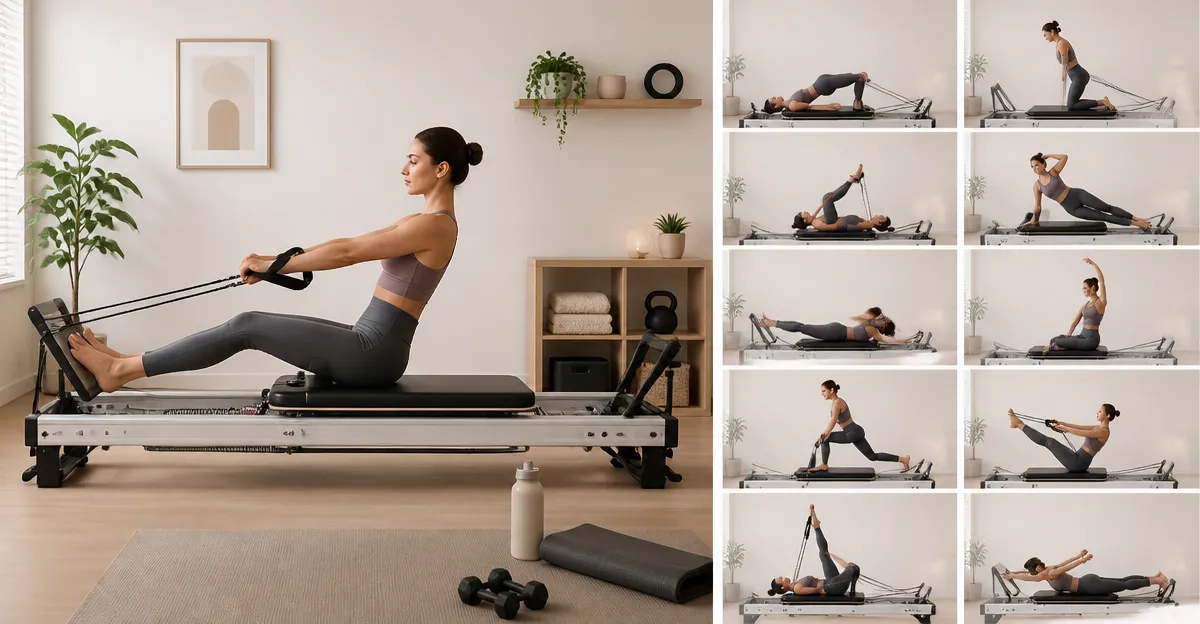
How to Do Reformer Pilates in Small Spaces: 10 Space‑Saving Exercises for Tiny Homes and Apartments
In recent years, many individuals have transitioned to living in compact apartments or tiny homes. One of the most common challenges in such environments is maintaining a consistent Pilates practice without sacrificing valuable floor space. This guide explains how to perform ten effective reformer Pilates exercises that require minimal room, while also recommending equipment that maximizes convenience and safety.
The reader will learn how to set up a portable reformer, select accessories that improve stability, and execute each movement with proper alignment. By following these instructions, one can achieve a full‑body workout that strengthens the core, improves flexibility, and enhances posture, all within a footprint that fits under a couch or behind a door.
What You’ll Need
- JANUA Pilates Reformer Board – foldable, 5‑in‑1 sliding board with adjustable resistance bands; price $98.90; rating 4.2/5 from 1,217 reviews.
- Winonela Wooden Pilates Reformer – solid maple wood construction, 7‑in‑1 system; price $169.99; rating 4.6/5 from 66 reviews.
- yeuG Grip Pilates Socks – non‑slip silicone grips, 4‑pair pack; price $8.49; rating 4.5/5 from 5,376 reviews.
- PAETA Foldable Pilates Reformer – 86" adjustable height, piano wire springs; price $439.99; rating 4.6/5 from 281 reviews.
- Dpiolrcag Foldable Pilates Reformer – 4‑spring system, 250 lb capacity; price $299.99; rating 4.7/5 from 294 reviews.
1. Footwork on the Reformer
The footwork series activates the legs, glutes, and core while providing a low‑impact cardio component. Position the reformer carriage near the foot bar, lie supine, and place the heels on the bar. Press out and bend the knees, maintaining a neutral spine.
For compact living spaces, the JANUA Pilates Reformer Board is ideal because it folds flat and can be stored behind a sofa. Its adjustable resistance bands allow the practitioner to increase difficulty without adding bulky weight stacks. The board’s lightweight design ensures that the footwork routine can be performed on any carpeted surface without the need for permanent installation.
Key details: the board includes a smart timer for precise interval training and a phone holder for video guidance. Users report a sturdy feel and a smooth sliding motion, which is essential for maintaining consistent resistance throughout the set.
2. The Hundred on the Reformer
The Hundred builds endurance in the abdominal wall and improves circulation. Begin in a supine position with the carriage at the head end, knees bent, and the head and shoulders lifted. Pump the arms vigorously for 100 counts while maintaining a steady breath pattern.
When space is limited, a stable platform is crucial. The Winonela Wooden Pilates Reformer offers a studio‑grade wooden deck that does not wobble, even on hardwood floors. Its high‑density foam cushioning protects joints, and the integrated resistance bands provide the necessary challenge without requiring additional equipment.
Because the Winonela model supports up to 600 lb, users of all body types can perform the Hundred with confidence. The included Pilates ball and non‑slip socks further enhance stability, allowing the practitioner to focus on breath control rather than balance concerns.
3. Leg Circles with Adjustable Height
Leg circles target the hip stabilizers and improve range of motion. Lie on the carriage, place the feet in the straps, and draw circles with the legs while keeping the pelvis stable.
The PAETA Foldable Pilates Reformer excels in this exercise because its removable stands enable quick height adjustments. Lowering the reformer reduces the lever length, making the circles easier for beginners, while raising it increases difficulty for advanced practitioners.
Its piano wire springs deliver a smooth, silent glide, which is essential for maintaining concentration during the precise circular motion. The foldable design means the equipment can be stored in a closet after the session, preserving valuable floor area.
4. Kneeling Arm Press
The kneeling arm press strengthens the shoulders, chest, and triceps while engaging the core for stability. Kneel on the carriage, place the hands on the foot bar, and press forward, extending the arms fully.
The Dpiolrcag Foldable Pilates Reformer provides a comfortable leather‑coated mat that cushions the knees during this exercise. Its four‑spring system offers progressive resistance, allowing the practitioner to start with light tension and increase as strength improves.
Because the Dpiolrcag reformer folds to occupy only 1.83 sq ft, it can be set up in a bedroom corner and then stored away, making it perfect for apartments where dedicated workout rooms are unavailable.
5. Side‑Lying Leg Pull‑Through
Side‑lying leg pull‑through isolates the outer thighs and gluteus medius. Lie on one side, hook the top foot into the strap, and pull the carriage toward the hip while keeping the torso stable.
Stability of the foot is paramount for this movement. The yeuG Grip Pilates Socks provide silicone‑filled grips that prevent slipping on the reformer’s carriage. Their breathable cotton blend keeps the feet dry, reducing the risk of blisters during repetitive pull‑throughs.
Users appreciate the closed‑toe design, which eliminates the distraction of toe separation common with five‑toe socks. The socks also double as a light indoor slipper, adding value beyond the Pilates session.
6. Short Box Series
The short box series includes roll‑ups, side bends, and twists that enhance spinal articulation and core strength. Position a short box on the carriage, sit upright, and perform the prescribed movements.
All of the reformers listed can accommodate a short box, but the JANUA Pilates Reformer Board offers a built‑in resistance band system that adds an extra challenge without requiring additional weights. The board’s compact size ensures that the short box does not encroach on surrounding furniture.
Practitioners should engage the core throughout each repetition, maintaining a neutral pelvis to protect the lower back.
7. Standing Split
The standing split improves balance, hamstring flexibility, and hip extension. Stand on the carriage, place one foot on the foot bar, and lift the opposite leg into a split position while keeping the torso upright.
Because the standing split demands a stable platform, the Winonela Wooden Pilates Reformer provides a solid wooden deck that does not shift, even on polished floors. The high weight capacity (600 lb) ensures that the reformer remains steady for users of any size.
Use the included Pilates ball for added proprioceptive feedback if balance becomes challenging.
8. Roll‑Up with Resistance Band
The roll‑up promotes spinal articulation and abdominal control. Start supine, hold the resistance band anchored to the foot bar, and roll the torso up to a seated position, then reverse the motion.
The resistance band integrated into the JANUA Pilates Reformer Board allows the practitioner to customize tension, making the roll‑up more demanding as strength improves. The smart timer on the board can be set for timed intervals, encouraging consistent pacing.
Ensure the band is securely attached to the foot bar before each set to avoid accidental release.
9. Spine Stretch Forward
Spine stretch forward elongates the back and hamstrings while reinforcing proper breathing. Sit on the carriage with legs extended, hold the foot bar, and hinge at the hips to reach forward.
Any of the featured reformers can be used for this exercise; however, the PAETA Foldable Pilates Reformer offers adjustable carriage height, enabling the practitioner to set the carriage low enough to maintain a comfortable sitting position even in a small living area.
Maintain a long neck and avoid rounding the shoulders to protect the cervical spine.
10. Cool‑Down Stretch
Finishing with a gentle cool‑down reduces muscle soreness and promotes relaxation. Perform a series of seated forward folds, gentle twists, and ankle circles while lying on the carriage.
Wearing the yeuG Grip Pilates Socks during the cool‑down ensures that the feet remain stable on the carriage, preventing slips as the body transitions from active to resting states.
Take deep, diaphragmatic breaths, inhaling for four counts and exhaling for six, to complete the session with a calm mind.
Tips & Pro Tips
- Place a yoga mat or thin rug under the reformer to protect hardwood floors and reduce noise.
- Use the smart timer on the JANUA board to structure interval training and avoid over‑exertion.
- When performing leg circles, keep the pelvis neutral by gently engaging the deep abdominal muscles.
- Regularly inspect the silicone grips on the yeuG socks; replace them if they show signs of wear to maintain safety.
- Store foldable reformers in their provided bags to protect moving parts from dust and accidental damage.
Troubleshooting
- Carriage slides too quickly. Reduce the resistance band tension on the JANUA board or adjust the spring tension on the PAETA reformer.
- Noise during movement. Apply a thin layer of silicone spray to the carriage tracks of the Winonela wooden reformer to dampen squeaks.
- Socks lose grip. Clean the silicone dots with a mild soap solution and ensure the floor is free of dust before each session.
- Assembly difficulty. Follow the step‑by‑step video guides included with the Winonela and PAETA models; contact the seller within 24 hours for assistance if a part is missing.
Conclusion
The ten exercises outlined above demonstrate that a full reformer Pilates routine can thrive within the constraints of a tiny living space. By selecting equipment that folds, offers adjustable resistance, and includes safety accessories such as non‑slip socks, one can achieve studio‑level results without sacrificing valuable square footage.
Readers are encouraged to experiment with the recommended products, adapt the movements to their personal fitness level, and maintain a consistent practice schedule. With dedication, the compact reformer setup will become a permanent ally in the pursuit of strength, flexibility, and overall well‑being.
Products Mentioned in This Guide
Frequently Asked Questions
What is the best portable reformer for tiny apartments?
The JANUA Pilates Reformer Board is a fold‑able, 5‑in‑1 sliding board with adjustable resistance bands, ideal for spaces under a couch or behind a door.
How much floor space does a portable reformer require?
When folded, it occupies roughly 2 ft × 1 ft, allowing it to fit in most small‑room corners or closets.
Can I safely perform a full‑body workout on a compact reformer?
Yes, the board’s resistance bands and sliding platform support core, leg, and upper‑body exercises when proper alignment is maintained.
What accessories improve stability on a small‑space reformer?
Non‑slip mats, wall‑mounted brackets, and lightweight ankle straps add safety without increasing the footprint.
How do I store the reformer after a session?
Simply fold the board, roll the resistance bands, and tuck it under a couch, in a closet, or behind a door for easy storage.