Introduction
This guide explains how one can quickly fold and store a Pilates reformer in a small apartment before a landlord inspection. It demonstrates why efficient storage is valuable for renters who wish to maintain a tidy living environment without sacrificing workout routines. The reader will learn a systematic approach that reduces setup time, protects equipment, and complies with lease agreements. By following the steps, one can avoid penalties, preserve the reformer’s condition, and keep personal fitness goals on track.
What You’ll Need
- A foldable Pilates reformer such as the Dpiolrcag Foldable Pilates Reformer or the PAETA Foldable Pilates Reformer.
- A set of soft moving pads or furniture sliders to protect floors.
- A sturdy storage bag or protective cover.
- A small hand tool (e.g., Allen key) for adjusting springs or cords if required.
Step 1: Clear the Workout Area
The first action is to remove any loose items from the vicinity of the reformer. One should gather towels, water bottles, and yoga mats and place them in a nearby closet. This prevents tripping hazards while the equipment is being folded. It also creates a clear visual field for the landlord, demonstrating respect for the property. Using a foldable reformer such as the Dpiolrcag model simplifies this process because its compact footprint occupies only 1.83 square feet when folded, according to the product specifications.
Step 2: Detach Removable Accessories
Next, one must detach accessories that are not integral to the frame. These include the jump board, resistance bands, and any external handles. The Dpiolrcag reformer features a removable foot bar with four adjustable angles; loosening the quick‑release pins allows the bar to be stored separately. The PAETA reformer offers a detachable jump board that adds cardio intensity; removing it reduces overall weight and eases handling. Secure each accessory in its original packaging to avoid loss during the inspection.
Step 3: Adjust Resistance Settings to Minimum
Before folding, set all springs and cords to their lowest resistance level. The Dpiolrcag includes four springs with 22 lb resistance and five cords ranging from 15 lb to 27 lb; moving the adjustment knobs to the minimum reduces tension on the frame. The PAETA model utilizes piano‑wire springs; lowering their tension prevents strain on the pulley system during transport. This step protects the mechanical components and ensures a smoother collapse.
Step 4: Collapse the Reformer Frame
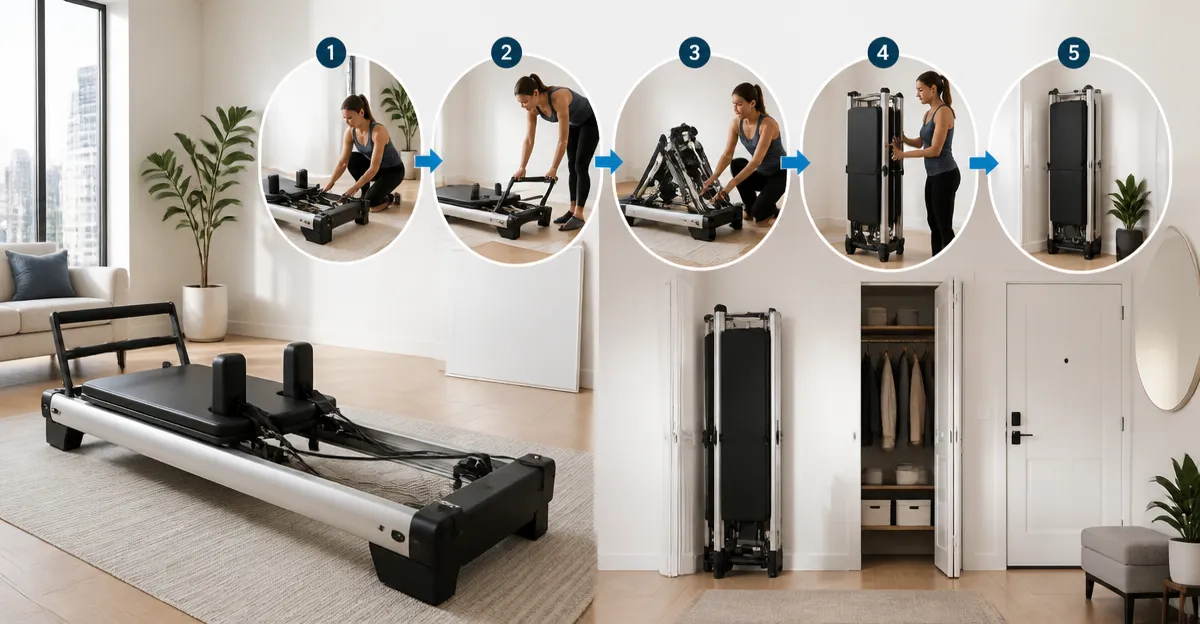
Now one can begin the folding process. For the Dpiolrcag reformer, release the locking pins on the carriage, then gently lower the sled onto the base. The eight silent low‑friction wheels glide effortlessly, allowing the frame to slide into a compact position. The user should then fold the side rails inward, aligning the pre‑drilled holes for the safety pins. The PAETA reformer, measuring 86 inches in length, folds by disengaging the removable stands, folding the carriage, and securing the rails with the supplied Velcro straps. Both models require approximately 60 lb of lifting effort; using furniture sliders under the base can reduce floor friction.
Step 5: Secure the Folded Unit with Wheels
After the frame is folded, engage the built‑in wheels to move the unit to its storage location. The Dpiolrcag reformer includes eight PU wheels that lock in place when the carriage is fully collapsed, preventing accidental rolling. The DWKWE reformer also features whisper‑quiet wheels with a stainless‑steel frame, offering stability during transport. One should roll the reformer toward a designated corner or under a bed, ensuring that the wheels are locked to avoid movement during the inspection.
Step 6: Protect the Equipment with a Cover
Cover the folded reformer with a breathable, sweat‑proof cover to shield it from dust and accidental scratches. The Dpiolrcag package includes a waterproof cushion that doubles as a protective layer. For the PAETA model, the manufacturer provides storage bags that fit the folded dimensions of 1.4 sq ft. Placing the cover or bag over the unit creates a neat appearance and signals to the landlord that the tenant respects the property.
Step 7: Perform a Final Visual Check
Before the landlord arrives, conduct a brief visual inspection of the stored reformer. Verify that all pins are securely fastened, wheels are locked, and the cover is properly positioned. Ensure that the surrounding area is free of debris and that any cords are neatly coiled. This final step demonstrates responsibility and reduces the likelihood of a follow‑up request for adjustments.
Tips & Pro Tips
- Label each accessory with a small tag to simplify reassembly after the inspection.
- Keep the original assembly manual in a drawer; it contains useful diagrams for quick folding.
- Use a soft rubber mat beneath the reformer while folding to protect both the equipment and the floor.
- If the reformer feels heavy, enlist a second person; most reviewers note that two‑person assembly is recommended for larger models.
Troubleshooting
- Wheel does not lock: Check that the locking lever is fully engaged; the Dpiolrcag warranty offers rapid response for defective wheels.
- Pins do not align: Use a drill to enlarge misaligned holes, as suggested by a reviewer who fixed a similar issue on the Dpiolrcag reformer.
- Scraping noise during folding: Lubricate the carriage rails with a silicone spray; the PAETA reformer’s ultra‑smooth tracks benefit from periodic maintenance.
Conclusion
By following this systematic approach, one can fold and store a Pilates reformer quickly, keeping the apartment inspection‑ready and preserving the equipment’s lifespan. The guide emphasizes safety, efficiency, and respect for rental agreements. Implementing these steps ensures that personal fitness routines remain uninterrupted while maintaining a pristine living space.
Products Mentioned in This Guide
Frequently Asked Questions
How do I quickly fold a Pilates reformer before a landlord inspection?
Clear the area, detach any removable parts, collapse the frame according to the manufacturer’s guide, and secure it with a storage bag or cover.
What tools and accessories are needed to fold and store the reformer?
A small Allen key for adjustments, soft moving pads or furniture sliders, and a sturdy storage bag or protective cover.
Can I safely store a foldable reformer in a small apartment?
Yes, when folded and placed in a protective bag it fits in closets or corners without damaging the equipment or your space.
How do I protect my floors while moving the reformer?
Place soft moving pads or furniture sliders under the base to prevent scratches and distribute weight evenly.
Will folding the reformer keep me compliant with most lease agreements?
Properly folded and stored equipment that doesn’t cause damage or block exits generally meets lease requirements and avoids penalties.