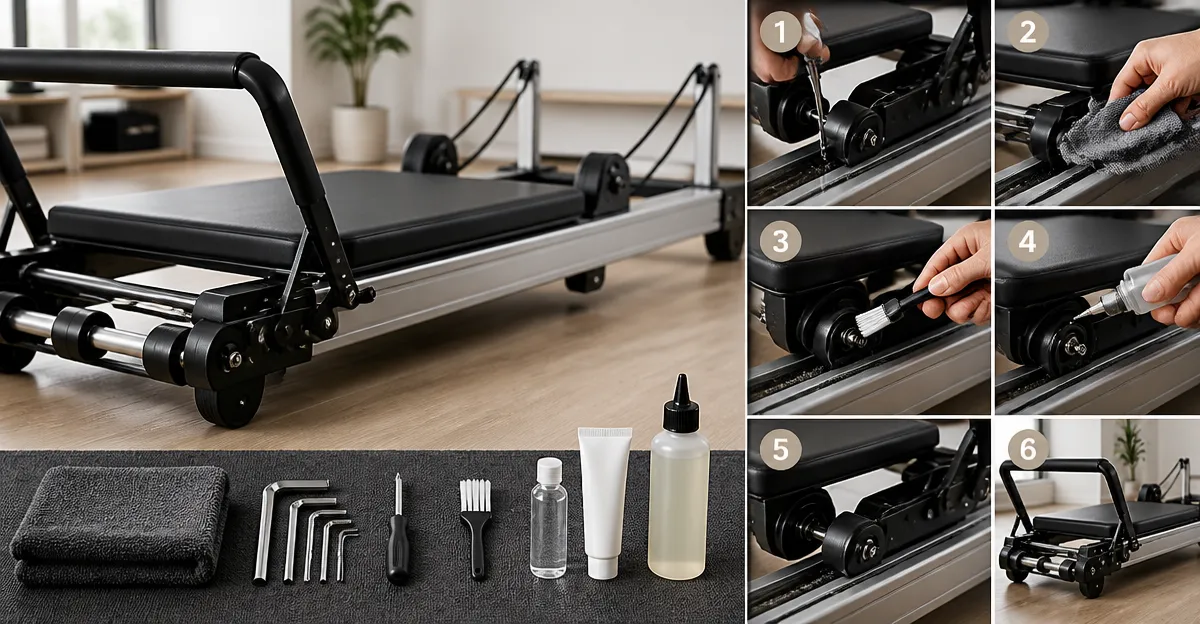
How to Fix Reformer Carriage Noise: Step-by-Step DIY Guide to Eliminate Squeaks
Introduction
Anyone who has spent time on a Pilates reformer knows that a squeaking carriage can disrupt focus and diminish the quality of a workout. This guide will teach the reader how to diagnose, clean, lubricate, and tighten the moving components that cause noise, ensuring a quiet and fluid motion. By following the systematic approach presented here, one can restore the reformer to studio‑grade performance without costly professional service. The information is valuable because it saves time, reduces maintenance expenses, and protects the long‑term durability of the equipment.
What You'll Need
- Soft‑bristle brush or lint‑free cloth
- Isopropyl alcohol or mild degreaser
- Silicone‑based lubricant (compatible with metal and wood)
- Allen wrenches or hex key set (typically 4 mm, 5 mm, 6 mm)
- Adjustable wrench
- Torque wrench (optional for precise bolt tightening)
- Replacement springs or wheels if wear is evident (see product recommendations below)
Step 1: Inspect the Carriage and Wheels
The first step is a visual and tactile inspection of the carriage, wheels, and rail tracks. Remove any loose accessories and slide the carriage back and forth to locate the exact point of friction. Pay particular attention to the wheel hubs, the metal rails, and the connection points where the springs attach. If the carriage feels uneven, the wheels may be misaligned or the bolts may have loosened over time.
At this stage, it is useful to compare the movement with a high‑quality reference model such as the PAETA Wooden Pilates Reformer. This reformer is praised for its smooth carriage glide, solid oak frame, and premium wire springs. Its 4.5‑star rating (221 reviews) and $749.99 price point indicate a well‑engineered baseline against which to measure your own machine.
Step 2: Clean the Rails and Wheels
Dust, sweat residue, and old lubricant can accumulate on the aluminum rails and polyurethane wheels, creating a gritty surface that generates squeaks. Use a soft‑bristle brush dipped in isopropyl alcohol to scrub the rails, then wipe them dry with a lint‑free cloth. Repeat the process on each wheel, removing any debris lodged in the bearings.
If the wheels show signs of wear, consider upgrading to the wheels supplied with the PAETA Foldable Pilates Reformer. Its quiet PU wheels are designed for smooth gliding and have earned a 4.6‑star rating from 284 reviewers. Priced at $419.09, this model offers an economical source of high‑quality wheels that can be swapped onto an existing reformer.
Step 3: Lubricate Moving Parts
After cleaning, apply a thin layer of silicone‑based lubricant to the rail tracks and the inner surfaces of the wheel bearings. Avoid oil‑based products, as they can attract dust and create a gummy film. Rotate each wheel several times to distribute the lubricant evenly. The goal is a whisper‑quiet glide, not a slippery surface that compromises safety.
For users who prefer a complete reformer upgrade, the LeisureKing Wood Pilates Reformer includes premium piano wire springs and a mortise‑and‑tenon oak frame that naturally reduces friction. Its 4.8‑star rating (273 reviews) and $949.99 price reflect a studio‑grade build that rarely requires additional lubrication, making it an excellent long‑term solution.
Step 4: Tighten Bolts and Screws
Loose bolts are a common source of intermittent squeaking, especially around the carriage mounting plate and the spring anchor points. Using the appropriate Allen wrench, tighten each bolt to the manufacturer’s torque specification (typically 4–6 Nm). If a torque wrench is unavailable, hand‑tighten until the bolt feels snug, then give a firm final turn.
The Dpiolrcag Foldable Pilates Reformer features a robust 8‑wheel low‑friction system and includes all necessary hex keys in the package. Its 4.7‑star rating (303 reviews) and $284.99 price make it a cost‑effective source of high‑quality hardware for any reformer repair.
Step 5: Adjust Spring Tension and Alignment
Spring tension that is too high or too low can cause the carriage to bind, producing a high‑pitched squeal. Locate the spring adjustment knobs on the side of the reformer and release the tension gradually, testing the carriage after each change. Aim for a smooth, controlled resistance that matches the user’s strength level.
If the existing springs are worn, the PAETA Wooden Pilates Reformer offers a 12‑gear spring system that provides a wide range of resistance levels. Its durable wire springs are rated for 60,000 cycles, ensuring long‑term reliability for users who demand precise tension control.
Step 6: Test the Reformer and Fine‑Tune
After completing cleaning, lubrication, tightening, and spring adjustment, perform a full range of motion test. Slide the carriage from one end of the rail to the other slowly, listening for any residual noise. Then execute a series of typical exercises—footwork, leg circles, and arm straps—to confirm that the carriage remains quiet under load.
If a faint squeak persists, revisit the wheel bearings and apply a second light coat of lubricant. In rare cases, the rail may be slightly warped; a professional straightening service may be required, but most home users can resolve the issue with the steps outlined above.
Tips & Pro Tips
- Perform maintenance quarterly to prevent buildup of grime and wear.
- Use a microfiber cloth for final polishing; it removes fingerprints without scratching the surface.
- When tightening bolts, alternate opposite sides to maintain even pressure and avoid warping the carriage.
- Store the reformer in a low‑humidity environment; excess moisture can corrode metal components.
- Keep a small maintenance kit (brush, lubricant, hex keys) attached to the reformer’s side rail for quick access.
Troubleshooting
| Problem | Possible Cause | Solution |
|---|---|---|
| Persistent high‑pitched squeak | Spring anchor loose | Re‑tighten spring hooks; apply a dab of silicone lubricant. |
| Intermittent grinding | Wheel bearing debris | Disassemble wheel, clean bearing, re‑lubricate. |
| Carriage sticks at one end | Rail misalignment | Check rail for dents; gently tap back into shape or replace rail. |
| Noise only under heavy load | Insufficient spring tension | Increase spring resistance using the adjustment knobs. |
Conclusion
By following the six detailed steps—inspection, cleaning, lubrication, tightening, spring adjustment, and testing—one can eliminate carriage squeaks and enjoy a silent, fluid Pilates session. Regular maintenance not only prevents noise but also extends the lifespan of the reformer, protecting the investment. Readers are encouraged to apply these practices routinely and to consider the recommended reformer models for future upgrades or replacements.
Products Mentioned in This Guide
Frequently Asked Questions
What causes a Pilates reformer carriage to squeak?
Squeaks are usually caused by dry or dirty bearings, loose bolts, worn wheels, or insufficient lubrication on metal and wood contact points.
How can I diagnose the source of the carriage noise?
Inspect the carriage, wheels, and pivot points for dirt, wear, and looseness, then move the carriage slowly to pinpoint where the sound originates.
Which lubricant is best for a reformer carriage?
A silicone‑based lubricant compatible with both metal and wood surfaces provides smooth, non‑sticky lubrication without damaging the finish.
What tools do I need to tighten loose bolts on the carriage?
An Allen (hex) wrench set (4‑6 mm), an adjustable wrench, and optionally a torque wrench to achieve the manufacturer’s spec.
When should I replace the reformer wheels or springs?
Replace wheels or springs if they show cracks, excessive wear, or no longer roll smoothly after cleaning and lubrication.