How to Inspect and Buy a Used Foldable Reformer Online: The Complete Buyer’s Guide & Inspection Checklist
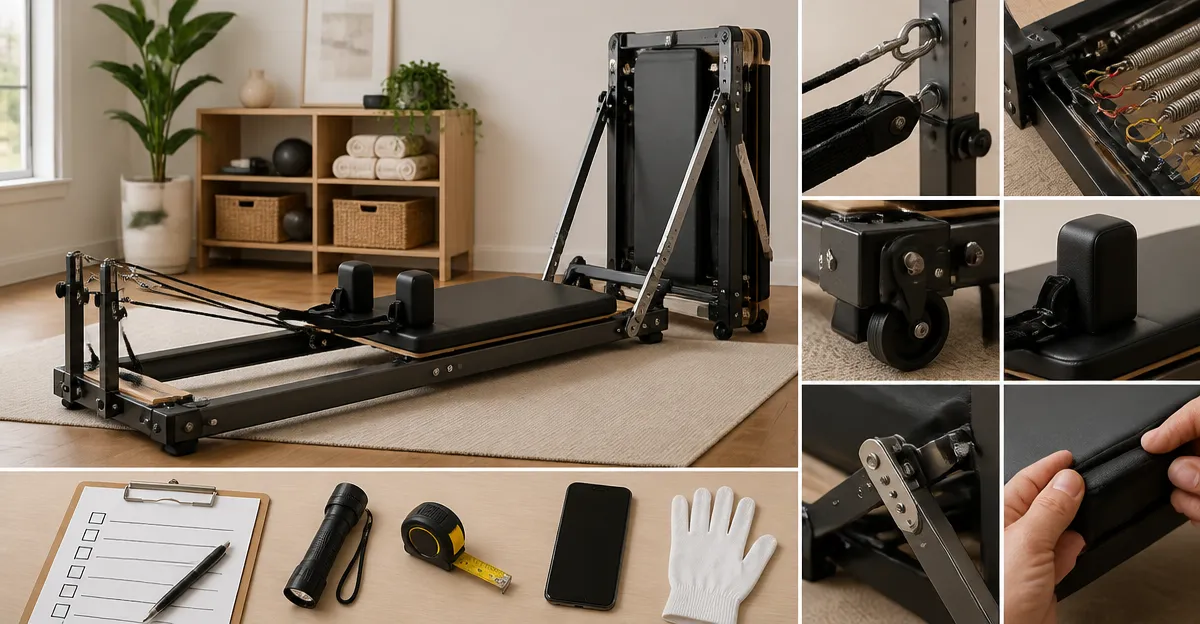
Purchasing a used foldable reformer can save a substantial amount of money while still delivering studio‑grade performance. This guide teaches readers how to evaluate listings, verify condition, and negotiate confidently. By following the systematic checklist, one reduces the risk of hidden defects and ensures the equipment fits personal fitness goals.
What You Will Need
- Smartphone or tablet with a high‑resolution camera
- Measuring tape (preferably 150 cm long)
- Portable LED flashlight for close inspection
- Access to reputable online marketplaces (e.g., Amazon, eBay, Facebook Marketplace)
- Reference reformer for comparison – see product recommendations below
Step 1: Define Your Requirements
Before browsing listings, clarify the primary goals for the reformer. Ask whether the intended use is beginner mat work, advanced full‑body flows, or rehabilitation. Note the desired weight capacity, maximum height, and the amount of floor space available when the unit is unfolded. Recording these criteria in a simple spreadsheet helps filter out unsuitable options quickly.
Step 2: Research Listings Thoroughly
Search for keywords such as "foldable reformer", "used Pilates reformer", and specific model numbers. Pay attention to the seller’s description length; detailed posts usually indicate a more honest seller. Save listings that meet the basic criteria and compare price points to market averages. For reference, a brand‑new PAETA 92" Wooden Pilates Reformer retails for $849.99 with a 4.5‑star rating, providing a benchmark for valuation.
Step 3: Verify Seller Credibility
Examine the seller’s profile for feedback scores, response time, and transaction history. A high rating (above 4.5) and multiple positive reviews suggest reliable communication. If the seller is a private individual, request a short video call to discuss the equipment. This step reduces the likelihood of scams and clarifies any ambiguities in the listing.
Step 4: Request Detailed Photographs and Video
Ask the seller for high‑resolution images of the carriage, springs, foot bar, and folding mechanism. A short video demonstrating the wheels rolling smoothly is invaluable. Compare the visual details with the specifications of a known quality model, such as the PAETA 86" Foldable Pilates Reformer ($497.99, 4.6‑star rating). Notice differences in wood grain, metal finish, and overall wear.
Step 5: Inspect the Mechanical Components
When the seller agrees to an in‑person inspection or provides a video, focus on the carriage tracks, wheels, and pulley system. The tracks should be free of dents, and wheels should rotate without grinding. The PAETA 92" model uses multi‑directional wheels and smooth oak tracks that have been praised for silent operation; any deviation may indicate wear. Test the carriage by moving it back and forth; it should glide effortlessly and return to neutral without excessive force.
Step 6: Test Resistance and Spring Functionality
Identify the spring system (wire vs. coil) and count the number of springs. High‑quality reformers, like the LeisureKing Oak Wood Pilates Reformer ($899.99, 4.8‑star rating), feature five premium springs with adjustable tension. Ask the seller to demonstrate resistance at low, medium, and high settings. Listen for creaking noises and feel for consistent tension across the range of motion. Inconsistent resistance often signals broken coils or misaligned hooks.
Step 7: Evaluate Frame Integrity and Finish
The frame should be free of cracks, splinters, or rust. Wooden models rely on mortise‑and‑tenon joints; inspect these connections for any looseness. The LeisureKing reformer’s oak frame is noted for its durability, supporting up to 440 lb. For metal frames, such as the Goplus Foldable Pilates Reformer ($219.99, 4.5‑star rating), verify that welds are smooth and that the load‑bearing capacity of 660 lb is not compromised by visible bending.
Step 8: Confirm Accessories and Documentation
Check that the reformer includes essential accessories: foot bar, shoulder blocks, jump board, and any included straps. Missing components can reduce value and require additional purchases. Request original manuals or assembly videos; the PAETA 92" model provides installation videos that simplify setup for new owners. Verify that the serial number matches the manufacturer’s records when possible.
Step 9: Negotiate Price and Secure Payment
Based on the inspection findings, formulate a fair offer. Use the price of comparable new models as leverage; for example, a gently used Dpiolrcag Foldable Pilates Reformer retails for $315.99 with a 4.6‑star rating, making it a solid reference point for budgeting. Opt for secure payment methods such as PayPal Goods & Services, which provide buyer protection. Avoid cash transfers unless meeting in person at a public location.
Step 10: Arrange Safe Delivery or Pickup
Because reformers are heavy and bulky, plan transportation carefully. If the seller offers local pickup, bring a dolly and enlist assistance to avoid injury. For longer distances, consider a freight service that offers insurance. Verify that the unit is folded correctly and that wheels are locked before loading onto a vehicle.
Tips & Pro Tips
- Measure the unfolded length and compare it to the ceiling height of your workout space; a 92‑inch model may require higher ceilings.
- Test the folding mechanism multiple times to ensure it locks securely and does not wobble.
- Inspect the upholstery for tears or excessive wear; foam padding should retain its shape after repeated compression.
- Ask the seller about the history of the reformer – frequent studio use may result in higher mileage on springs.
- When possible, request a short trial session to perform a few signature exercises (e.g., footwork, long stretch, jump board).
Troubleshooting Common Issues
| Problem | Possible Cause | Solution |
|---|---|---|
| Squeaky wheels | Loose bearings or lack of lubrication | Apply a silicone‑based lubricant; if noise persists, replace the wheel. |
| Uneven resistance | Broken spring or mis‑aligned hook | Swap the faulty spring with a new one; verify hook positioning. |
| Carriage does not return to neutral | Track debris or warped rail | Clean the tracks with a soft cloth; if warped, consider professional repair. |
Conclusion
By defining clear requirements, scrutinizing listings, and performing a thorough mechanical inspection, one can purchase a used foldable reformer with confidence. The checklist presented above minimizes hidden costs and maximizes long‑term satisfaction. Whether choosing a premium oak model or a budget‑friendly alternative, the right due diligence ensures the equipment supports a sustainable Pilates practice at home.
Products Mentioned in This Guide
Frequently Asked Questions
What are the key signs of wear to look for when inspecting a used foldable reformer online?
Examine the carriage rails, springs, folding hinges, and upholstery for rust, cracks, missing parts, or tears.
How can I verify the dimensions and weight capacity of a used reformer from a listing?
Request the seller’s original spec sheet or measure the unit with a tape measure and compare it to the manufacturer’s published dimensions and capacity.
What tools should I use to assess a reformer’s condition during a virtual inspection?
Use a high‑resolution camera or smartphone to capture close‑up photos, and a portable LED flashlight to illuminate hidden joints and mechanisms.
How do I ensure the foldable mechanism operates safely before purchasing?
Ask the seller to demonstrate the folding and unfolding process on video, checking that locks engage smoothly and there is no wobble or excessive noise.
What negotiation tips help lower the price of a used foldable reformer?
Reference any needed repairs, missing accessories, or market‑price comparisons, and propose a fair reduction based on the estimated cost of those fixes.