How to Measure Space for a Pilates Reformer in Your Apartment: Step‑by‑Step Guide
Introduction
Creating a dedicated Pilates studio at home can transform one’s fitness routine, but the first obstacle is often spatial. This guide teaches readers how to accurately measure an apartment, consider clearance requirements, and match those dimensions with a suitable reformer. By following each step, one will avoid costly returns, maintain safe workout zones, and select a machine that maximizes comfort and performance.
The process is practical for renters, small‑space dwellers, and anyone who values efficient use of square footage. Readers will gain confidence in using basic tools, interpreting manufacturer specifications, and applying professional‑grade advice without needing an interior designer.
What You’ll Need
- Measuring tape or laser distance measurer
- Notebook or digital note‑taking app
- Floor protection (rubber mat or interlocking tiles) – optional but recommended
- One of the recommended Pilates reformers (see Step 4)
Step 1: Identify the Intended Workout Area
Begin by selecting the room or corner where the reformer will reside. Consider natural lighting, proximity to a power outlet for optional electronics, and the flow of foot traffic. A quiet area near a wall often provides the most stable base, while a central location allows for unrestricted movement in all directions.
Mark the boundaries of the chosen zone with painter’s tape. This visual cue helps prevent accidental over‑measurement and clarifies the space that will be allocated to the equipment.
Step 2: Measure Length, Width, and Height
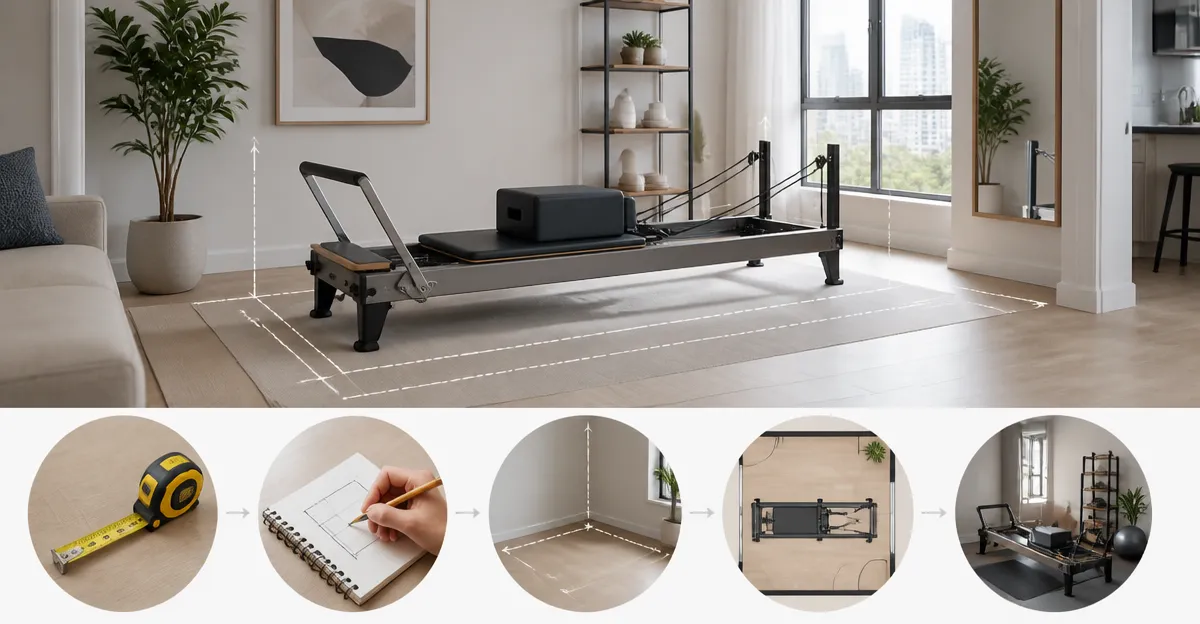
Using a steel measuring tape or a laser device, record three primary dimensions: the length of the floor space, the width from side to side, and the ceiling height. Write each figure in centimeters and inches for flexibility, as product specifications are often listed in both units.
For accuracy, measure twice and note any irregularities such as protruding radiators, baseboard heaters, or built‑in shelves. These obstacles reduce usable space and must be accounted for when selecting a reformer.
Step 3: Account for Clearance and Movement
Beyond the footprint of the machine, a Pilates reformer requires additional clearance for safe operation. Most manufacturers recommend at least 24 inches (61 cm) of space behind the carriage for full extension, and 12 inches (30 cm) on each side for arm and leg movements.
Calculate the total required area by adding the clearance to the measured dimensions. For example, a reformer that is 92 inches long will need roughly 116 inches of clear floor length (92 + 24). Record these expanded measurements; they become the decisive criteria for product compatibility.
Step 4: Choose a Reformer That Fits Your Measurements
With precise dimensions in hand, compare them against the specifications of the reformers listed below. Each recommendation includes key features, price, and rating to aid an informed decision.
1. PAETA Wooden Pilates Reformer
This 92‑inch wooden model offers a solid oak frame, 12‑gear spring system, and a jump board for cardio‑intensive sessions. Its extended carriage provides a generous range of motion, making it ideal for taller users or those who enjoy full‑length leg extensions. Priced at $749.99 with a 4.6‑star rating from 237 reviews, it balances professional‑grade durability with home‑friendly foldability.
Because the machine measures 92 inches in length, ensure the cleared floor space is at least 116 inches (including the recommended 24‑inch rear clearance). The sturdy wooden construction can support up to 500 lb, which exceeds typical apartment floor‑load limits, but adding a rubber mat will distribute weight evenly.
2. WNPANE Foldable Pilates Reformer
At 77 inches long, this compact reformer folds for storage and weighs only 62 lb. Its adjustable resistance system and smooth carriage make it suitable for apartments where space is at a premium. The price of $299.99 and perfect 5‑star rating (11 reviews) reflect strong value for beginners and intermediate users.
With a required clearance of 101 inches (77 + 24), the WNPANE fits comfortably in most living‑room layouts while still leaving room for yoga mats or a small side table.
3. DWKWE Foldable Pilates Reformer 75"
This 75‑inch model combines steel springs with latex tubes for hybrid resistance. It features a wood‑grain finish and a jump board, and it supports up to 400 lb. Priced at $299.99 with a 4.2‑star rating from 22 reviews, it offers a balance between aesthetic appeal and functional performance.
Calculate a minimum floor length of 99 inches (75 + 24) to accommodate full carriage travel. Its lighter weight (approximately 62 lb) simplifies relocation within the apartment.
4. DWKWE Wood Grain Pilates Reformer
The 88‑inch wood‑grain metal frame delivers a studio‑like appearance while remaining foldable. Dual resistance (springs + latex) and a jump board broaden workout options. At $359.99 and a 4.3‑star rating (59 reviews), it is positioned as a mid‑range choice for users seeking both style and durability.
For this model, the required clearance expands to 112 inches. The 300‑lb weight capacity is ample for most home users, but a protective mat is advisable to prevent floor damage.
5. PAETA Foldable Pilates Reformer
Measuring 86 inches, this reformer offers adjustable heights, piano‑wire springs, and a jump board. It supports up to 500 lb and includes storage bags for easy folding. The price of $439.99 and a strong 4.6‑star rating (284 reviews) indicate high customer satisfaction.
Plan for a minimum floor length of 110 inches (86 + 24). Its larger footprint suits users who prioritize a longer carriage for advanced leg work, yet the foldable design still permits storage under a bed or in a closet.
After reviewing each option, select the reformer whose total length (machine + clearance) fits within the measured space while leaving at least 12 inches of side clearance for arm movements. This systematic approach prevents the common mistake of purchasing a machine that feels cramped once assembled.
Step 5: Verify Floor Load Capacity and Protection
Even though most reformers list a maximum user weight, the apartment floor must also sustain the combined weight of the equipment and the user. Typical residential flooring can handle 40–50 lb per square foot; however, a concentrated load from a heavy wooden frame may exceed this limit.
Place a sturdy rubber mat or interlocking foam tiles beneath the reformer to spread the load evenly. This also protects the floor from scratches and reduces noise during carriage glides.
Finally, test the stability by gently rocking the machine after assembly. If any wobble occurs, adjust the leveling feet or add additional floor padding until the reformer sits level.
Tips & Pro Tips
- Measure twice, record thrice: A small miscalculation can lead to an ill‑fitting machine, especially in tight studios.
- Consider ceiling height: Some reformers have adjustable headrests that extend upward; ensure at least 84 inches of headroom.
- Plan for accessories: Jump boards and foot straps increase the overall footprint; keep them in mind when allocating space.
- Use a laser level: Align the reformer parallel to the longest wall to maximize usable length.
- Check building policies: Some leases restrict modifications that affect flooring; a removable mat is usually permissible.
Troubleshooting
| Problem | Possible Cause | Solution |
|---|---|---|
| Carriage does not glide smoothly | Insufficient lubrication or debris on tracks | Wipe tracks with a dry cloth, apply a silicone‑based lubricant recommended by the manufacturer. |
| Insufficient clearance for leg extensions | Measured space too small for selected model | Switch to a shorter reformer such as the WNPANE Foldable Pilates Reformer or rearrange furniture. |
| Floor creaks under the reformer | Heavy frame concentrating load on a single joist | Place a plywood board beneath the mat to distribute weight across multiple joists. |
Conclusion
Measuring apartment space for a Pilates reformer involves precise dimension capture, allowance for movement clearance, and thoughtful product selection. By following the five steps outlined above, readers can avoid common pitfalls, protect their flooring, and invest in a machine that aligns with their spatial constraints and fitness goals. Whether one chooses the expansive PAETA Wooden Pilates Reformer or the space‑saving WNPANE Foldable Pilates Reformer, the process remains the same: measure accurately, add clearance, verify load capacity, and enjoy a personalized home studio.
Products Mentioned in This Guide
Frequently Asked Questions
How much clearance space is needed around a Pilates reformer?
Most manufacturers recommend at least 2 feet of clearance on each side and 3 feet at the front and back for safe movement.
What tools give the most accurate measurements for a small apartment?
A laser distance measurer provides quick, precise readings, but a sturdy measuring tape works well for corners and irregular shapes.
Can I place a reformer on carpeted flooring?
Yes, but use a rubber mat or interlocking tiles to protect the floor and prevent the reformer from sliding.
How do I compare my room dimensions to a reformer’s specifications?
Measure length, width, and ceiling height, then match those numbers against the reformer’s footprint and height requirements listed by the manufacturer.
What should renters consider before installing a Pilates reformer?
Check lease terms for floor‑weight limits, ensure the reformer won’t damage walls or flooring, and verify you have enough clearance for full‑range exercises.