How to Transport a Foldable Pilates Reformer by Car or Taxi: A Step‑by‑Step Safety Guide
Introduction
Transporting a foldable Pilates reformer can appear daunting, especially when the vehicle of choice is a personal car or a taxi. This guide explains precisely how to prepare, load, secure, and unload a reformer without causing damage to the equipment or the vehicle. Readers will learn practical techniques, safety considerations, and product recommendations that streamline the process while protecting valuable investment.
The information presented is applicable to a range of reformer models, including wooden, steel, and hybrid designs. By following each step, one can avoid common injuries, prevent costly repairs, and ensure a smooth transition from one location to another.
Although the guide references specific products, the procedures remain effective even without purchasing additional tools. The recommendations simply provide convenient, time‑saving alternatives that many users find beneficial.
Overall, the reader will acquire a reliable method for moving a reformer safely, whether the journey is a short trip to a studio or a longer relocation.
What You’ll Need
- Foldable Pilates reformer (e.g., PAETA Wooden Pilates Reformer)
- Heavy‑duty moving blankets or padded covers
- Strap set with ratchet or cam buckles
- Furniture dolly or hand‑truck (optional but helpful for larger models)
- Measuring tape
- Protective gloves
Step‑by‑Step Instructions
1. Measure the Vehicle Cargo Space
Before attempting to load the reformer, measure the interior length, width, and height of the car trunk, hatchback area, or taxi boot. Use a measuring tape and record the dimensions in centimeters or inches. Compare these measurements with the folded dimensions of the reformer, which typically range from 86 to 92 inches in length and a width of approximately 30 inches. If the reformer exceeds the available space, consider a larger vehicle or a professional moving service.
For example, the PAETA Wooden Pilates Reformer folds to a compact size that can fit in most midsize SUVs when the rear seats are folded down. Knowing the exact dimensions prevents last‑minute surprises and protects the vehicle interior from scratches.
Why this matters: Accurate measurements ensure that the reformer can be positioned without forcing it into a tight space, which could damage the frame or the car interior.
Safety tip: Verify the weight capacity of the vehicle’s cargo floor. Most reformers weigh between 150 and 250 pounds; exceeding the floor rating may cause structural failure.
2. Prepare the Reformer for Transport
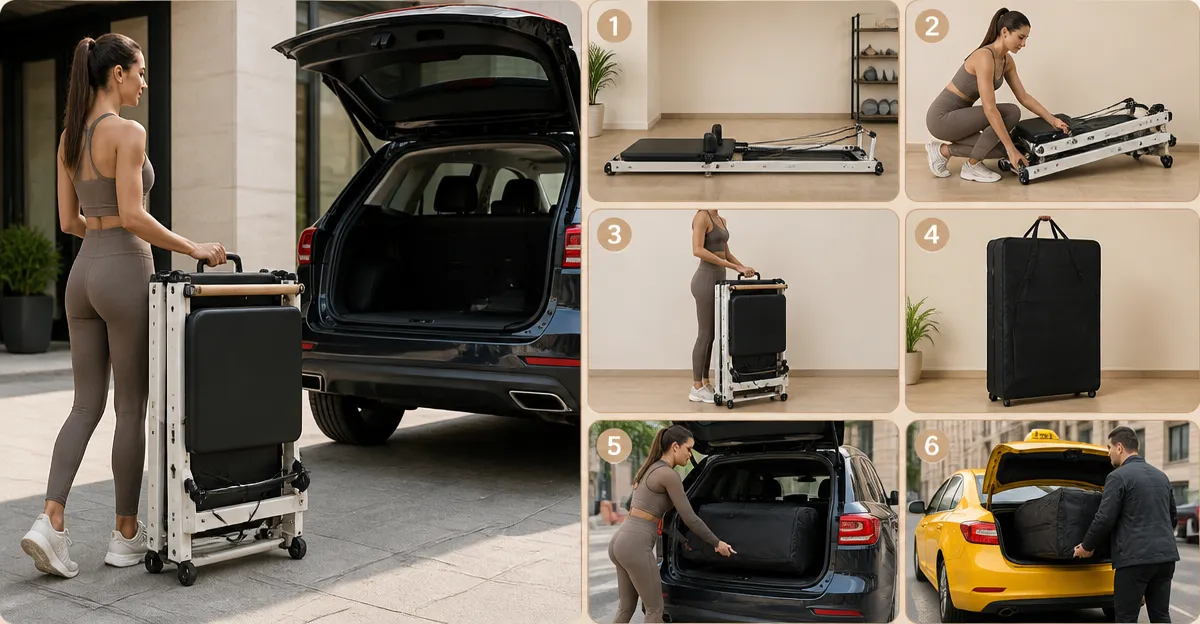
Begin by folding the reformer according to the manufacturer’s instructions. The PAETA models feature movable wheels and a fold‑away design that simplifies this process. Secure any detachable accessories, such as the jump board, foot bar, or resistance bands, in a separate bag to prevent them from rattling during transit.
Apply a moving blanket over the carriage and frame to protect painted surfaces and wooden finishes. The blanket also reduces noise while the reformer slides on the vehicle floor.
Why this product helps: The PAETA Foldable Pilates Reformer includes built‑in wheels that allow the user to roll the unit into the vehicle with minimal effort. The wheels are designed for low‑friction movement, reducing strain on the user’s back.
After the unit is wrapped, attach two strong straps at opposite ends of the carriage. Position the straps so that they run parallel to the length of the reformer, creating a secure “sandwich” that limits lateral movement.
3. Choose the Appropriate Transport Vehicle
If a private car is used, a hatchback, SUV, or station wagon offers the most cargo flexibility. For a taxi, request a vehicle with a trunk that can be opened fully, such as a sedan with a large boot or a minivan. Communicate the dimensions of the folded reformer to the driver in advance to ensure the vehicle can accommodate the load.
When a larger vehicle is unavailable, the JANUA Foldable Pilates Reformer Board serves as a lightweight alternative. Its compact footprint (approximately 5 feet long when assembled) can fit in most standard car trunks without folding, making it a convenient backup option.
Why this matters: Selecting a vehicle with sufficient interior space reduces the need for awkward maneuvering, which can lead to dropped equipment or personal injury.
Pro tip: Place a non‑slip mat on the vehicle floor before loading the reformer. The mat adds friction and protects the car’s carpet from scuffs.
4. Load the Reformer Safely
Position the moving blanket‑covered reformer at the rear of the cargo area, with the wheels (if present) facing outward. If the reformer has built‑in wheels, gently roll it onto the floor. For heavier steel models, such as the Fairgom Pilates Reformer, use a furniture dolly to glide the unit into place. The Fairgom model weighs approximately 200 pounds and includes a reinforced carbon steel frame; a dolly distributes the load evenly and protects the user’s back.
Once the reformer is positioned, verify that it is centered and does not protrude beyond the vehicle’s interior edges. Adjust as needed to achieve a balanced load.
Why this step is critical: A balanced load prevents the vehicle’s suspension from being unevenly stressed, which can affect handling and safety during travel.
Safety reminder: Always wear protective gloves when handling metal brackets or wooden edges to avoid splinters and bruises.
5. Secure the Reformer for Transit
Using the previously attached straps, tighten the ratchet or cam buckles until the reformer is firmly immobilized. Attach the straps to the vehicle’s anchor points, such as the trunk tie‑down hooks or seat belt anchors. Ensure the straps are not twisted and that the tension is evenly distributed.
The Dpiolrcag Foldable Pilates Reformer includes a set of 8 silent wheels that glide smoothly, reducing the effort required to position the unit. Its low‑friction wheels also make it easier to adjust the reformer’s placement after it has been secured.
Why proper securing matters: In the event of sudden stops or sharp turns, a loosely attached reformer can become a projectile, endangering occupants and causing damage to the equipment.
Pro tip: Double‑check strap tension after the vehicle begins moving, especially on longer trips. A quick pause at a safe location allows you to verify that the reformer remains stable.
6. Transport the Vehicle Carefully
Drive at moderate speeds and avoid abrupt acceleration or braking. Smooth driving reduces the forces acting on the secured reformer, preserving both the equipment and the vehicle’s interior.
If the journey includes multiple stops, such as loading and unloading passengers in a taxi, repeat the strap‑tension check after each stop. This habit ensures that any shift in cargo is corrected promptly.
Why this matters: Consistent, gentle driving minimizes wear on the reformer’s moving parts, such as the carriage rails and springs, extending the lifespan of the equipment.
Safety reminder: Never exceed the vehicle’s maximum payload rating. Overloading can impair handling and increase the risk of accidents.
7. Unload and Re‑assemble at Destination
When arriving at the destination, first release the securing straps and remove any protective blankets. If the reformer was folded, carefully unfold it following the manufacturer’s step‑by‑step guide. Verify that all springs, cords, and foot bars are correctly re‑attached and that the carriage glides smoothly.
The PAETA Foldable Pilates Reformer provides an installation video that walks the user through the re‑assembly process, making it straightforward even for beginners.
Why this step is essential: Proper re‑assembly ensures that the reformer functions as intended and prevents premature wear caused by misaligned components.
Final check: Perform a short test run of the carriage, confirming that the movement is quiet and unobstructed. If any noise or resistance is detected, inspect the rails and springs for debris.
Tips & Pro Tips
- Label each strap and accessory bag with its intended location on the reformer to speed up re‑assembly.
- Use a portable power bank to power any electronic instruction videos while on the move.
- Consider a protective floor mat for the destination room to preserve the reformer’s base and reduce noise.
- When using a taxi, request a vehicle with a rear hatch rather than a sedan trunk; the larger opening reduces the need to tilt the reformer.
- Inspect the wheels and bearings of any reformer with built‑in wheels before each trip; replace worn wheels promptly to avoid sudden failure.
Troubleshooting
| Problem | Possible Cause | Solution |
|---|---|---|
| Reformer rattles during transport | Straps not tightened enough or loose accessories | Re‑tighten all straps, secure accessories in padded bags, and add extra moving blankets. |
| Carriage does not glide smoothly after re‑assembly | Debris in rails or misaligned springs | Clean rails with a soft cloth, realign springs according to the manual, and lubricate with a silicone‑based spray. |
| Wheel lock on PAETA model sticks | Wheel brake engaged or debris caught | Release the wheel lock lever, clear any debris, and test wheel rotation before loading. |
Conclusion
Transporting a foldable Pilates reformer by car or taxi does not have to be a stressful experience. By measuring the cargo space, preparing the equipment with protective blankets and straps, selecting an appropriate vehicle, and following the loading and securing steps, one can move the reformer safely and efficiently. The product recommendations included in this guide provide practical tools that simplify each stage of the process while preserving the integrity of the equipment.
Readers are encouraged to apply these methods on their next relocation, studio visit, or home‑gym upgrade. With careful planning and attention to detail, the reformer will arrive ready for a productive workout, and the journey will be free of unnecessary complications.
Products Mentioned in This Guide
Frequently Asked Questions
What is the best way to fold a Pilates reformer for car transport?
Follow the manufacturer’s folding instructions, usually by collapsing the foot bar, locking the carriage, and securing any detachable parts.
How can I safely secure a foldable reformer in a sedan or SUV?
Use ratchet straps or heavy‑duty rope to anchor the reformer to the vehicle’s anchor points, and place a blanket or foam padding underneath to prevent movement.
Is it possible to transport a reformer in a taxi without damaging the vehicle?
Yes—fold the unit flat, protect the taxi’s interior with a moving blanket, and use portable straps or bungee cords to keep it stable during the ride.
What weight limit should I consider when loading a reformer into a personal car?
Check the vehicle’s payload rating (often listed in the owner’s manual) and ensure the reformer’s weight plus any accessories stays well below that limit, typically under 500 lb for most cars.
Do I need any special tools or accessories to move a foldable reformer?
Basic tools like a hand truck, moving blankets, and strap sets are sufficient; optional wheel chocks and a protective canvas sheet add extra safety.