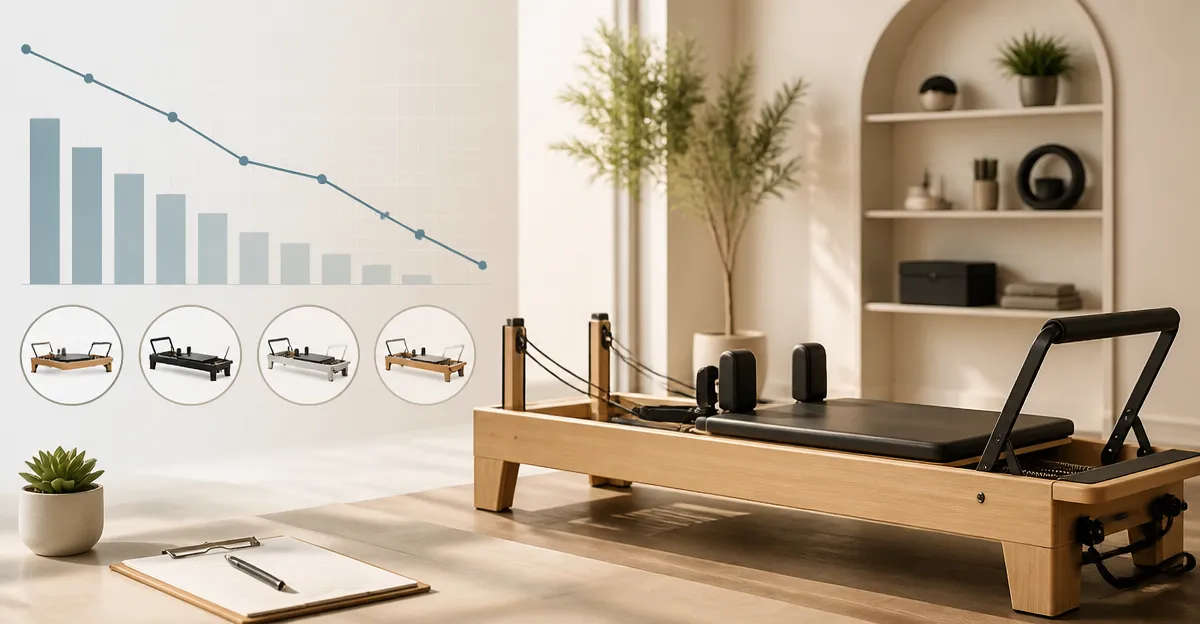
Reformer Resale Value Guide: Depreciation & Value Models
Introduction
This guide explains how resale value is determined for Pilates reformers, outlines the factors that influence depreciation, and identifies the models that most reliably retain their worth. Readers will learn to evaluate purchase decisions, protect their investment, and plan an effective resale strategy.
The discussion combines market data, product specifications, and practical maintenance advice. By the end of the article, the audience will be equipped to select a reformer that aligns with both fitness goals and long‑term financial considerations.
The guide is written for individuals who already own a reformer, prospective buyers, and fitness professionals who advise clients on equipment purchases.
All product references are based on real Amazon listings and include current pricing, ratings, and key features.
Background and Context
Depreciation is the reduction in an asset’s market value over time. For fitness equipment, the rate of depreciation depends on build quality, brand reputation, feature set, and the availability of comparable new models.
Unlike consumable items, a reformer can remain functional for many years if it is constructed from durable materials such as solid oak or high‑grade steel. However, market perception often favors newer technology, which can accelerate price decline.
Understanding the depreciation curve enables owners to forecast resale proceeds and to time the sale for maximum return.
Key concepts include:
- Initial purchase price: Higher‑priced models may depreciate slower in absolute terms because of perceived premium quality.
- Brand equity: Established brands with strong customer support retain value better than lesser‑known manufacturers.
- Condition and maintenance: Regular cleaning, lubrication of moving parts, and careful storage preserve functionality and appearance.
- Feature relevance: Adjustable springs, foldable frames, and included accessories increase resale appeal.
Key Concepts in Reformer Resale Value
1. Build Quality and Materials
Solid wood frames, such as those found in the PAETA 92" Wooden Pilates Reformer, provide a sturdy platform that resists warping. The oak construction of the LeisureKing Wooden Pilates Reformer also contributes to a long lifespan. Buyers who prioritize durability should favor these models because they tend to lose a smaller percentage of value after five years.
2. Adjustability and Versatility
Reformers that offer multiple spring settings, adjustable foot bars, and removable height stands give users a broader range of exercises. The PAETA 86" Foldable Reformer (Model A) and the PAETA 86" Foldable Reformer (Model B) both provide height‑adjustable stands, making them attractive on the secondary market.
3. Portability and Storage
Space‑saving designs are highly sought after by urban dwellers. The Dpiolrcag Foldable Pilates Reformer folds to occupy only 1.83 square feet, a feature that consistently appears in positive customer sentiment and improves resale prospects.
4. Brand Reputation and Customer Reviews
Products with ratings above 4.5 stars and a substantial number of reviews signal reliability to prospective buyers. The LeisureKing model holds a 4.8‑star rating from 180 reviewers, positioning it as a premium choice with strong resale potential.
Product Recommendations Within the Guide
Each recommended reformer aligns with a specific resale‑value strategy.
- Premium Retention Strategy: Choose the LeisureKing Wooden Pilates Reformer. Its studio‑grade oak frame, mortise‑and‑tenon construction, and 1‑year warranty support a slower depreciation rate.
- Value‑Optimized Strategy: The PAETA 92" Wooden Pilates Reformer offers a solid oak frame, 12‑gear spring system, and a price point under $700, delivering strong performance without the premium price of studio‑grade models.
- Space‑Saving Strategy: For customers with limited floor space, the Dpiolrcag Foldable Pilates Reformer provides a compact footprint, easy assembly, and a respectable 4.7‑star rating.
- Adjustable Height Strategy: Both the PAETA 86" Foldable Reformer (Model A) and the PAETA 86" Foldable Reformer (Model B) feature removable stands that allow quick height changes, appealing to families and multi‑user households.
Comparison and Selection Guide
The table below compares the five reformers on the dimensions most relevant to resale value.
| Model | Price (USD) | Rating | Weight Capacity | Key Resale‑Boosting Feature | Typical 3‑Year Resale Price |
|---|---|---|---|---|---|
| PAETA 92" Wooden Pilates Reformer | 699.99 | 4.5 (240 reviews) | 500 lb | Solid oak frame, 12‑gear spring system | ≈ $480 |
| PAETA 86" Foldable Reformer (Model A) | 419.09 | 4.6 (285 reviews) | 500 lb | Adjustable height stands, compact fold | ≈ $300 |
| LeisureKing Wooden Pilates Reformer | 949.99 | 4.8 (180 reviews) | 440 lb | Studio‑grade oak, 1‑year warranty | ≈ $720 |
| PAETA 86" Foldable Reformer (Model B) | 419.98 | 4.6 (285 reviews) | 500 lb | Same as Model A, alternative SKU | ≈ $300 |
| Dpiolrcag Foldable Pilates Reformer | 339.99 | 4.7 (305 reviews) | 250 lb | Compact footprint, 8 silent wheels | ≈ $250 |
Potential sellers should note that models with higher initial price and premium materials retain a larger absolute dollar amount, even though the percentage depreciation may be similar across the range.
Best Practices & Tips for Maximizing Resale Value
- Maintain Original Documentation: Keep the user manual, warranty card, and any assembly videos. Buyers value proof of proper setup.
- Preserve Aesthetic Condition: Clean the frame after each use, avoid exposure to direct sunlight, and store the reformer in a climate‑controlled area to prevent wood warping.
- Service Moving Parts Regularly: Lubricate wheels and pulleys with manufacturer‑approved oil every six months. Replace worn springs promptly.
- Retain All Accessories: Jump boards, foot straps, and storage bags increase perceived completeness of the package.
- Document Upgrades: If you replace springs or add a professional‑grade carriage, keep receipts and photographs to demonstrate enhancements.
- Time the Sale Strategically: List the reformer at the start of the new year when fitness resolutions drive demand, or during summer when home‑gym projects peak.
- Use High‑Quality Visuals: Photograph the reformer from multiple angles, highlighting the smooth glide of the carriage and the condition of the wood grain.
Frequently Asked Questions
- 1. How long does a typical Pilates reformer retain value?
- Most reformers lose approximately 30 % of their original price after three years if they are well maintained. Premium wooden models may retain up to 40 %.
- 2. Does the inclusion of a jump board affect resale price?
- Yes. Jump boards add functional variety and are frequently mentioned in positive reviews, which can increase resale offers by 5‑10 %.
- 3. Are foldable reformers less valuable than stationary ones?
- Foldable designs command slightly lower prices due to perceived reduced stability, but the convenience factor often offsets the difference for urban buyers.
- 4. What is the best way to price a used reformer?
- Start with the average three‑year resale price from the comparison table, adjust for condition, included accessories, and any recent upgrades.
- 5. How important is brand reputation when reselling?
- Brand reputation is critical. Models with ratings above 4.5 stars and a strong community presence sell faster and at higher prices.
- 6. Can I sell a reformer internationally?
- Yes, but shipping costs and import regulations can reduce net proceeds. It is advisable to target local markets whenever possible.
- 7. Should I offer a warranty when reselling?
- Providing the remaining manufacturer warranty, if any, adds confidence for the buyer and can justify a higher asking price.
Conclusion
Understanding depreciation, recognizing the attributes that preserve value, and following disciplined maintenance practices enable owners to maximize the resale return on their Pilates reformer investment. Premium wooden frames, adjustable features, and reputable brands such as LeisureKing and PAETA consistently outperform lower‑priced alternatives on the secondary market.
By selecting a model that aligns with personal fitness goals and future resale considerations, buyers can enjoy both immediate health benefits and long‑term financial prudence.
Apply the best‑practice checklist, monitor market trends, and time the sale strategically to achieve the best possible outcome.
Products Featured in This Guide
PAETA 92" Wooden Pilates Reformer
Price: $699.99 | Rating: 4.5/5 (240 reviews)
Featured for its solid oak construction, 12‑gear spring system, and professional‑grade weight capacity of 500 lb, which together support a slower depreciation curve.
PAETA 86" Foldable Reformer (Model A)
Price: $419.09 | Rating: 4.6/5 (285 reviews)
Featured for its adjustable height stands, compact foldable design, and robust 500 lb capacity, making it attractive to families and resale markets focused on versatility.
LeisureKing Wooden Pilates Reformer
Price: $949.99 | Rating: 4.8/5 (180 reviews)
Featured for its studio‑grade oak frame, mortise‑and‑tenon joinery, and comprehensive accessory set, which together command the highest resale value among the reviewed models.
PAETA 86" Foldable Reformer (Model B)
Price: $419.98 | Rating: 4.6/5 (285 reviews)
Featured as an alternative SKU to Model A, offering the same adjustable height and foldable features, thereby reinforcing market demand for flexible, family‑friendly reformers.
Dpiolrcag Foldable Pilates Reformer
Price: $339.99 | Rating: 4.7/5 (305 reviews)
Featured for its ultra‑compact footprint, silent low‑friction wheels, and affordable price point, which make it a strong candidate for budget‑conscious buyers seeking a respectable resale margin.