Introduction
Maintaining clean and disinfected upholstery on a Pilates reformer is essential for client safety, equipment longevity, and overall studio professionalism. This guide will teach readers how to perform a thorough cleaning routine without damaging the vinyl or foam surfaces. Readers will learn which tools simplify the process, why each step matters, and how to avoid common pitfalls. By following the instructions, both studio owners and home users can ensure a hygienic environment for every workout.
What You'll Need
- Soft microfiber cloths or lint‑free towels
- pH‑balanced upholstery cleaner (diluted mild soap works as an alternative)
- Isopropyl alcohol (70% solution) for disinfection
- Spray bottle for applying solutions
- Protective surface pad – consider the CONFTO Pilates Wedge Pad to shield the reformer while you work
- Optional: SEWD Pilates Sitting Box for transporting tools safely
Step 1: Prepare the Workspace
Begin by clearing the reformer of mats, props, and any detachable accessories. Position the CONFTO Pilates Wedge Pad on the carriage platform; its heavy‑duty black vinyl upholstery resists moisture and provides a stable, non‑slip surface for cleaning tools. Ensure the area is well‑ventilated, as the alcohol vapour can be strong in confined spaces. This preparation protects both the equipment and the floor from accidental spills.
Step 2: Remove Removable Upholstery Components
Detach any removable shoulder rests, headrests, or footbars according to the manufacturer’s manual. Place each component on the SEWD Pilates Sitting Box, which offers a lightweight, cushioned platform that prevents scratches during the cleaning process. The sitting box’s high‑density foam and durable vinyl cover (price $59.99, rating 4.2/5) ensure the parts remain stable and protected. Removing these pieces allows you to reach hidden seams and corners where bacteria often accumulate.
Step 3: Dust and Debris Removal
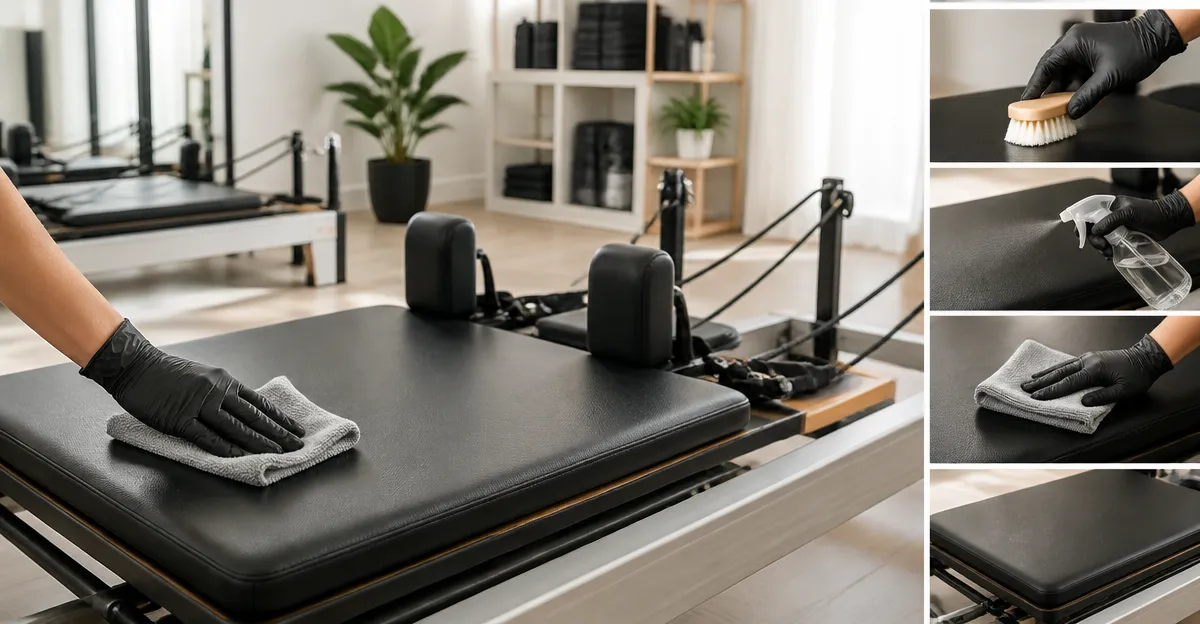
Using a dry microfiber cloth, gently wipe the entire upholstery surface to eliminate loose dust, sweat residue, and skin flakes. The soft fibers capture particles without grinding them into the vinyl, which could cause micro‑abrasions. For crevices around the carriage rails, employ a soft‑bristled brush or a cotton swab. This dry step prepares the surface for the cleaning solution, ensuring the disinfectant can contact the material directly.
Step 4: Apply a Gentle Cleaning Solution
Mix a few drops of mild dish soap with warm water in a spray bottle, creating a pH‑balanced solution that will not degrade the vinyl. Lightly mist the upholstery, avoiding saturation; excess liquid can seep into foam padding and weaken its structural integrity. Use a fresh microfiber cloth to rub the surface in circular motions, focusing on areas with visible sweat stains. The CONFTO Pilates Wedge Pad’s waterproof vinyl cover demonstrates how a resilient surface can tolerate brief exposure to moisture while remaining easy to wipe clean.
Step 5: Disinfect the Upholstery
After the cleaning solution has been removed, apply a 70% isopropyl alcohol solution using a clean spray bottle. Alcohol evaporates quickly, reducing the risk of moisture damage and leaving a germ‑free surface. Spray the solution sparingly, then wipe with a new microfiber cloth, ensuring full coverage of high‑touch zones such as shoulder blocks and headrests. Allow the reformer to air‑dry for at least five minutes; the rapid evaporation of alcohol also helps eliminate lingering odors.
Step 6: Clean Removable Components
Return to the detached shoulder rests, headrests, and footbars. Wipe each piece with the same mild soap solution, then disinfect with the alcohol spray. For the Plantzia Cotton Shoulder Covers, which are machine washable, place them in a gentle cycle after the cleaning session to maintain hygiene (price $13.95, rating 3.9/5). Their breathable cotton material absorbs sweat, and the non‑slip silicone layer prevents movement during exercises, making them a valuable addition to any reformer.
Step 7: Reassemble and Perform a Final Inspection
Once all components are completely dry, reattach them to the reformer according to the original configuration. Conduct a visual and tactile inspection to confirm that no cleaning residue remains and that all fasteners are secure. Test the carriage movement to ensure the upholstery slides smoothly without sticking. A properly reassembled reformer provides a safe, comfortable platform for the next client or home workout.
Tips & Pro Tips
- Never use bleach or ammonia‑based cleaners on vinyl upholstery; they can cause discoloration and brittleness.
- Work in sections to avoid the cleaning solution drying before you can wipe it away.
- For studios with high traffic, schedule a deep cleaning routine twice weekly and a quick surface wipe after each class.
- Store the CONFTO Pilates Wedge Pad on a shelf when not in use; its sturdy construction makes it a long‑lasting protective tool.
Troubleshooting
- Problem: Stubborn sweat stains remain after cleaning.
Solution: Apply a paste of baking soda and water, let it sit for five minutes, then wipe with a damp cloth before disinfecting. - Problem: Vinyl feels sticky after disinfecting.
Solution: Rinse the area with a lightly dampened cloth using plain water, then dry thoroughly. - Problem: Foam padding becomes soft or deformed.
Solution: Reduce the amount of liquid applied; use a spray bottle to control moisture and always dry promptly.
Conclusion
Cleaning and disinfecting reformer upholstery does not have to be a daunting task when a systematic approach is followed. By preparing the workspace, using appropriate tools such as the CONFTO Pilates Wedge Pad and SEWD Pilates Sitting Box, and applying gentle cleaning agents followed by alcohol disinfection, users can preserve equipment integrity and promote a healthy exercise environment. Regular maintenance extends the lifespan of the reformer, protects clients from pathogens, and reinforces a professional studio image. Implement these steps consistently, and the reformer will remain a reliable, hygienic centerpiece of any Pilates practice.
Products Mentioned in This Guide
Frequently Asked Questions
How often should I clean and disinfect my Pilates reformer upholstery?
Clean the upholstery after each class or session and disinfect it at least once a week for optimal hygiene.
What type of cleaner is safe for vinyl and foam upholstery on a reformer?
Use a pH‑balanced upholstery cleaner or a diluted mild soap solution to avoid damaging the material.
How do I properly use isopropyl alcohol for disinfecting reformer upholstery?
Apply a 70% isopropyl alcohol solution with a spray bottle, then wipe with a soft microfiber cloth, allowing it to air‑dry.
What tools help protect the reformer while cleaning?
Place a protective surface pad, such as the CONFTO Pilates Wedge Pad, under the reformer and use a SEWD Pilates Sitting Box to transport cleaning tools safely.
Can I use a mild soap solution instead of a pH‑balanced cleaner?
Yes, a diluted mild soap works as an alternative, provided it is rinsed off and the surface is dried promptly.